10% off on product page · save $2.55
Rectangle Body Shape Styling: Outfit Ideas and Tips
Understanding the Rectangle Body Shape
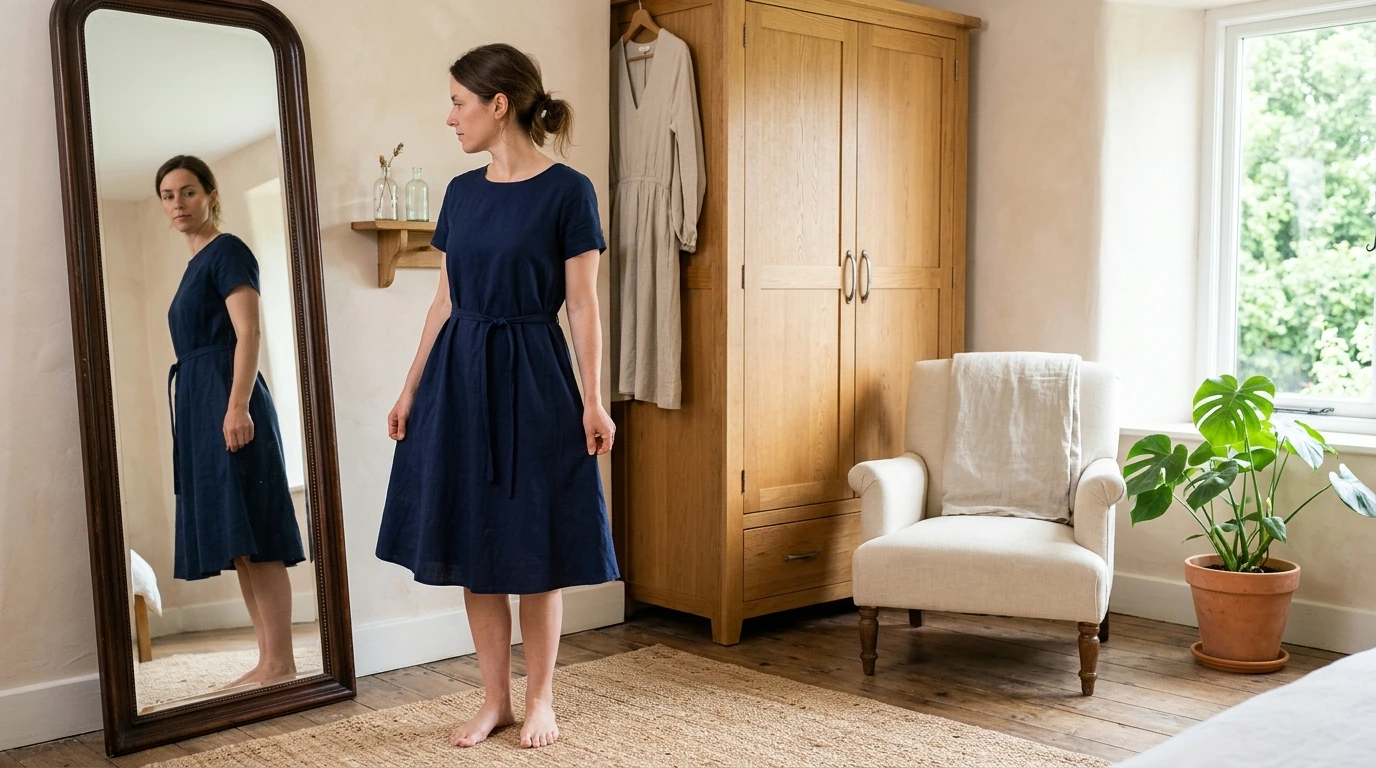
A rectangle shape often has shoulders and hips of similar width, with a waist that is less visibly defined. Your proportions may not match that description exactly, and that is perfectly normal. Body-shape categories are flexible tools for noticing how clothes fit, not ideals to measure yourself against.
Start with garments you already like. Notice whether a jacket sits comfortably at your shoulders, how a dress falls at your waist, and whether trousers have enough room at your hips. These observations can be more useful than assigning yourself a label, especially when you shop across brands with different cuts.

Build Outfits Around Your Preferred Silhouette
If you want more waist definition, try a wrap-style top, a softly belted dress, or a partial tuck at the front of your shirt. Place a belt where it feels comfortable rather than forcing it into a particular position.
To play with proportions, add a structured jacket at the shoulders or choose a fuller skirt that moves away from the hips. A shorter jacket over a longer top can create a visual break. Alternatively, keep the lines long and simple with straight-cut separates.
Try combinations with shoes you already wear: a tucked tee and wide-leg trousers can feel relaxed with sneakers, while a wrap top and straight-leg trousers can work for a more polished occasion.
Check the product’s listed specifications when evaluating build outfits around your preferred silhouette.
Featured in this guide
shaping-style-dressing-the-rectangle-body-ultimate-guide-for-flattering-fashion
Choose Pieces That Work Together
Experiment with a fitted top under an open jacket, a dress with a removable belt, or a cropped layer over higher-rise trousers. If you prefer looser clothing, pair a flowing shirt with a straight skirt or wear relaxed pieces together.
A bright top can draw attention upward, while a patterned skirt can make the lower half of an outfit a focal point. Similar colors create a quieter, unified look. Structured fabrics tend to hold their shape, while softer fabrics tend to drape closer to the body.
When trying something on, sit down, reach forward, and walk around. Look for comfortable shoulders and enough room at the hips. If the shoulders fit but the waist needs adjustment, a tailor may be able to help. Read the care instructions to decide whether a garment suits your routine.
Check the product’s listed specifications when evaluating choose pieces that work together.
Explore Shaping Style
Our Shaping Style: Dressing the Rectangle Body is a resource for exploring fashion choices for a rectangle shape. Use the ideas as a starting point, then adapt them to your wardrobe, preferences, and everyday life.
If you are also exploring other proportions, our Confidently Styled: Dressing the Inverted Triangle offers another body-shape guide. For broader fashion inspiration, the Museum at FIT shares exhibitions and resources on clothing and fashion history.
Before choosing, compare the product details with your daily routine, available space, care needs, and preferred setup. The strongest option is usually the one that fits the intended use clearly and remains simple to clean, store, and check before repeat use.
It is also worth checking measurements, material notes, included parts, and compatibility details so the item matches the way it will be used after delivery.
Before choosing, compare the product details with your daily routine, available space, care needs, and preferred setup. The strongest option is usually the one that fits the intended use clearly and remains simple to clean, store, and check before repeat use.
FAQ
What are the three basic dressing styles?
Casual, business, and formal are three common ways to describe dressing styles, though style categories vary. Each can be adapted to your preferences and the occasion.
What is the 3-3-3 rule for outfits?
One common 3-3-3 wardrobe challenge uses three tops, three bottoms, and three pairs of shoes to create multiple outfits. Variations on the rule also exist.
What are three types of dressings?
In a clothing context, casual, business, and formal dress are three common categories. If you mean food, vinaigrette, ranch, and Caesar are three types of salad dressing.
See if shaping-style-dressing-the-rectangle-body-ultimate-guide-for-flattering-fashion fits your setup