Baby Overstimulation: Signs and Calming Routines
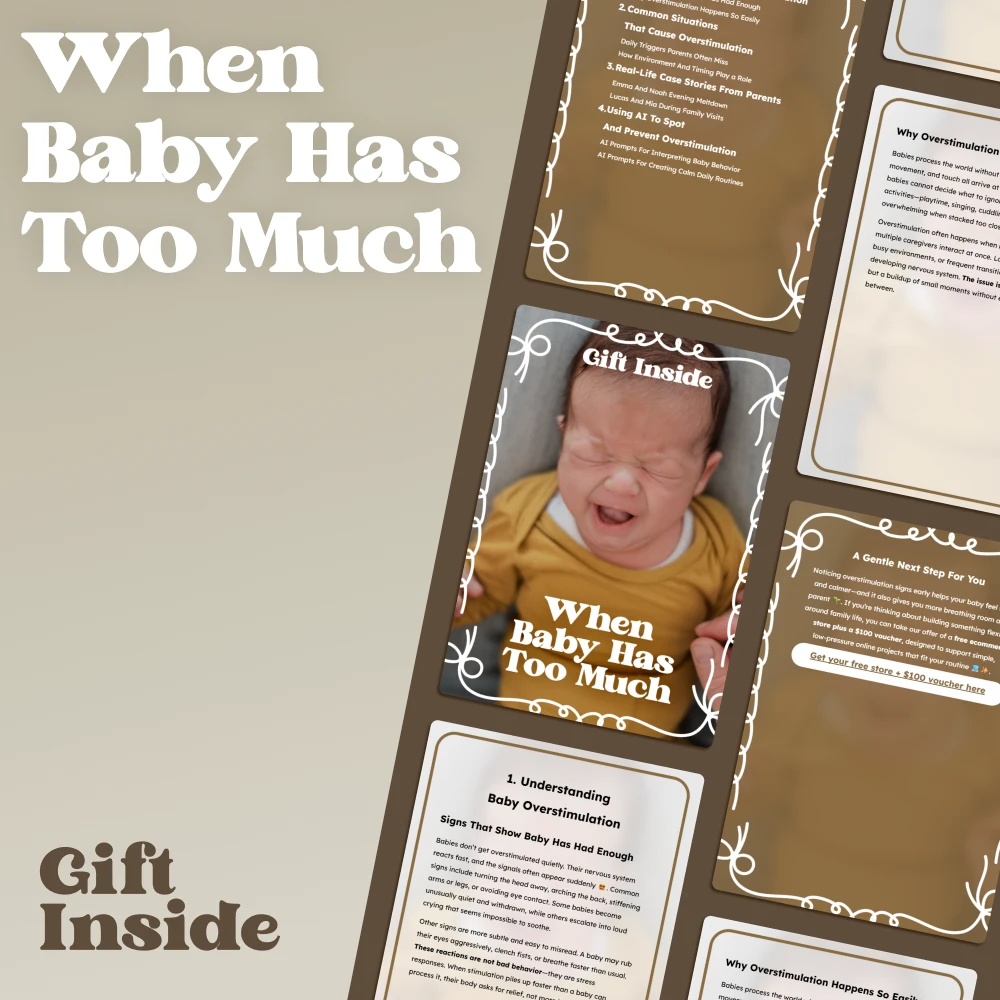
Recognizing when baby may need a break
Babies take in new sights, sounds, sensations, and interactions every day. Sometimes you may notice your baby turning away during play, fussing in a busy room, yawning, or becoming harder to settle. Your baby might also seem less interested in interaction than they were a few minutes earlier.
These cues don’t point to one certain explanation. A baby who turns away may simply need a pause, while a fussy baby may be hungry, tired, uncomfortable, or in need of a diaper change. Look at the whole situation: how long your baby has been awake, when they last fed, and what has been happening around them.
Babies differ in how they respond to activity, and the same baby may react differently from one day to the next. No single cue proves overstimulation. You can respond to what you notice without needing to label every difficult moment.

A calmer response, one step at a time
Pause play or move away from a noisy group. Lowering voices and dimming bright lights may give your baby a chance to settle.
Consider whether your baby needs a feeding, a diaper change, gentle holding or a familiar rest routine. Watch their response and give them time. Some babies settle with close contact; others may need less interaction.
No soothing technique works every time. If your first approach doesn’t help, it’s okay to try something different.
Featured in this guide
when-baby-has-too-much-practical-guide-to-baby-overstimulation-signs-calm-routines-and-understanding-infant-behavior-for-new-parents
Build a flexible wind-down routine
Allow quiet time between visitors or play sessions, and think about where you can step away during an outing. If your baby seems tired, it’s fine to change plans or leave early.
A manageable wind-down might include dimming the lights, using a calm voice and holding your baby before placing them in their sleep space.
For every sleep, place your baby on their back on a firm, flat sleep surface, free of loose bedding and soft objects.
Check the product’s listed specifications when evaluating build a flexible wind-down routine.
When to seek help
Contact your baby’s healthcare professional if crying or behavior is unusual, persistent or concerning to you. It’s appropriate to ask for help even if you’re unsure what’s causing the change.
For a baby under three months old, seek prompt medical advice for a temperature of 100.4°F (38°C) or higher. Seek emergency help for breathing difficulty, unresponsiveness or other severe symptoms.
If you feel overwhelmed by crying, place your baby safely on their back in a crib and take a brief break. Ask someone you trust for support when you can. Never shake a baby.
A practical guide for new parents
Our When Baby Has Too Much guide focuses on possible overstimulation signs, calm routines, and understanding infant behavior. It’s a resource for reflecting on everyday cues, not a substitute for advice from your baby’s healthcare professional.
If you’re also helping an older family member consider home technology, our Smart Home Automation for Seniors Checklist is a separate resource for planning a setup around safety, comfort, and independence.
Before choosing, compare the product details with your daily routine, available space, care needs, and preferred setup. The strongest option is usually the one that fits the intended use clearly and remains simple to clean, store, and check before repeat use.
It is also worth checking measurements, material notes, included parts, and compatibility details so the item matches the way it will be used after delivery.
FAQ
What is the Golden Hour after birth?
The Golden Hour generally refers to the first hour after birth, often used for early bonding and skin-to-skin contact when parent and baby are medically stable. Medical care needs can change that plan.
Can parents kiss a newborn?
Parents and visitors should avoid kissing a newborn when they are ill or have a cold sore, because infections can be serious for newborns. Follow your healthcare professional’s guidance.
What are the five stages of a baby?
There is no single universally accepted set of five baby stages. Development is often discussed in age ranges, but babies reach milestones at different times; your healthcare professional can help you understand your baby’s progress.
See if when-baby-has-too-much-practical-guide-to-baby-overstimulation-signs-calm-routines-and-understanding-infant-behavior-for-new-parents fits your setup