Safe Charging Habits for Longer-Lasting Devices
Start with a practical charging routine
Lithium-ion batteries gradually age with time and use. Heat and prolonged periods at very high or very low charge can add stress, so small changes to your routine may help support battery health over time. They won’t stop a battery from aging, and you don’t need to follow a perfect schedule.
When convenient, keep your charge roughly between 20% and 80%. Think of that range as a flexible habit, not a safety limit. If your device has an optimized charging setting or an option to limit the maximum charge, turn it on when it suits your routine. These features can reduce the time a battery spends fully charged without requiring constant attention.

Choose a routine that fits your day
On a typical day, a short top-up can be easier than waiting until your battery is nearly empty. An 80% limit may reduce the time it spends at a high charge.
Before a long commute or a day away from outlets, charging to 100% is reasonable. For a device you plan to store for months, follow its manufacturer’s recommended charge level and storage conditions.
Featured in this guide
mastering-safe-charging-habits-for-your-devices-practical-ebook-guide-to-battery-health-smart-charging-and-long-lasting-tech-care
What about overnight charging?
Overnight charging can be convenient. Use compatible accessories, keep the device clear and ventilated, and enable optimized charging if available. You can use a charge limit on ordinary nights and adjust it when you need more runtime.
Demanding games or video calls can make a device warmer while it charges. If that happens, pause unnecessary heavy use and let it cool.
Keep a charging reference close
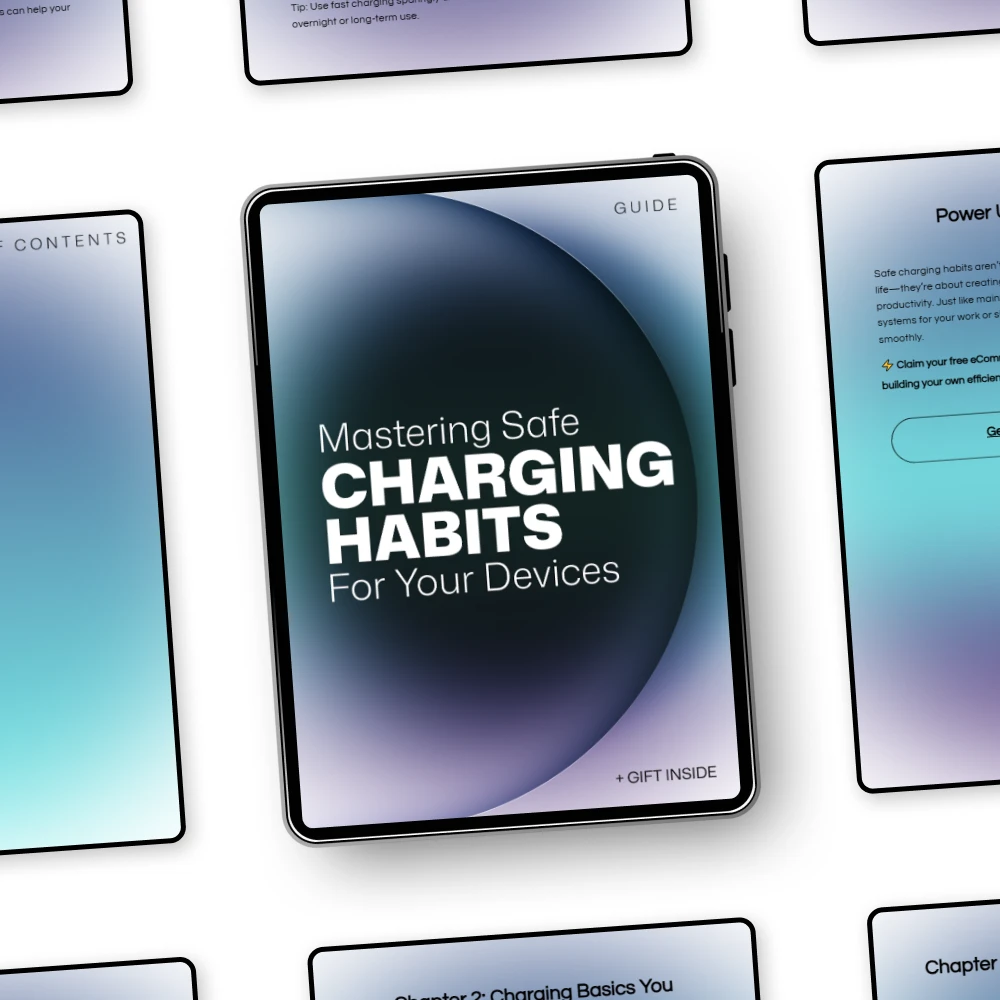
Our Mastering Safe Charging Habits for Your Devices ebook is a practical reference for building smarter charging and device-care habits. Consider it if you want a guide focused on battery health and long-lasting tech care, while continuing to follow the instructions for your own devices.
Check the product’s listed specifications when evaluating keep a charging reference close.
Compare related options such as screen-free-success-simple-routines-to-reclaim-your-time-ebook-guide-with-daily-routines-to-lower-screen-time-mindful-habits-digital-balance-reset to match features, dimensions, and use case before choosing.
Before choosing, compare the product details with your daily routine, available space, care needs, and preferred setup. The strongest option is usually the one that fits the intended use clearly and remains simple to clean, store, and check before repeat use.
It is also worth checking measurements, material notes, included parts, and compatibility details so the item matches the way it will be used after delivery.
Before choosing, compare the product details with your daily routine, available space, care needs, and preferred setup. The strongest option is usually the one that fits the intended use clearly and remains simple to clean, store, and check before repeat use.
FAQ
What is the 80/20 rule for charging lithium-ion batteries?
The 80/20 rule means keeping a battery roughly between 20% and 80% when practical to help reduce stress from charge extremes. It is a flexible habit, not a mandatory safety rule.
Is it better to charge my phone to 80% or 100%?
An 80% limit can reduce the time your battery spends at a high charge, while 100% is reasonable when you need more runtime. Use your phone’s optimized charging feature if available and suitable for your routine.
What are the three mistakes when charging your phone?
Three mistakes are using damaged or incompatible accessories, trapping heat, and ignoring unusual heat or swelling. Replace damaged accessories with compatible ones, charge on a ventilated surface, and disconnect an unusually hot device or stop using one with a swollen battery and seek qualified guidance.
See if mastering-safe-charging-habits-for-your-devices-practical-ebook-guide-to-battery-health-smart-charging-and-long-lasting-tech-care fits your setup